Showing posts with label stomach and back pain. Show all posts

Sunday, September 22, 2019

Back Pain Remedies

Related image


Those twinges that come every now and then are not a respecter of nationality, position or age. They hear nobody and know nobody. They just come right in at anytime that they desire even to the point of ruining your own precious life.

Cathy Wong, a licensed naturopathic physician, shares fifteen back pain remedies. However, she advised that at the moment you feel the ache, the primary step is to be properly assessed by your care provider. There are some medications that may suit one individual but not for you. The best way to know is to approach your doctor for consultation. Here are some of those remedies:

* Capsaicin Cream
An active ingredient in chili peppers, capsaicin cream when applied to the skin provides an analgesic effect as it reduces the substance P, a neurochemical that transmits pain. You may remember that analgesic is one of the many back pain remedies. A typical dosage is only about 0.025% four times a day. If possible, wear gloves when rubbing it to any part of your body.

* Vitamin D
Found in fish with small bones, vitamin can also be obtained from fortified milk, cereal grains and sunlight exposure. However, it has its own risks such as darker pigmented skin and digestive disorders. The utilization of glucocorticoid medications can be helpful for conditions like lung diseases and allergy irritations. For those who are advanced in years, there should just be minimal sunlight contact.

* Music Therapy
Truly one of the low cost back pain remedies, music therapy is not that soothing to the ears but it takes away depression and anxiety caused by sciatica. It has an immediate effect in the reducing the sore although, the aftermaths were not that astounding. 

* Willow Bark
The part of a salix alba tree has been discovered to have properties that can relieve aches. The ingredient called salicin, found in a willow bark, is transformed inside the body to salicylic acid- believed to be the active compound that eases pain and inflammation. 

* Bowen Rehabilitation
A type of gentle bodywork, Bowen rehabilitation has been developed by an Australian osteopath, Tom Bowen. This is one of the back pain remedies that has been widely recognized in Europe and has been gaining popularity in North America. Specialists use a series of moves by their fingers and thumbs. It typically involves the specialist pulling the skin loosed apart from the muscle by putting in pressure and immediately releasing the tension. 

* Alexander Technique
Teaching people to improve their posture and eliminate bad habits, the Alexander technique stresses the importance of choosing a healthy lifestyle. It was created by an Australian actor, Frederick Matthias Alexander. He learned how to correct croakiness in his voice by not slouching and just standing tall. 

Atlanta Acupuncture for Lower Back Pain

Image result for Atlanta Acupuncture for Lower Back Pain


The National Institutes of Health reports that up to 80 percent of the general population in the United States suffers or will suffer from an episode of lower back pain. That means four out of five adults are likely to have lower back pain at some point in life, making it one of the most common neurological ailments, second only to headache.

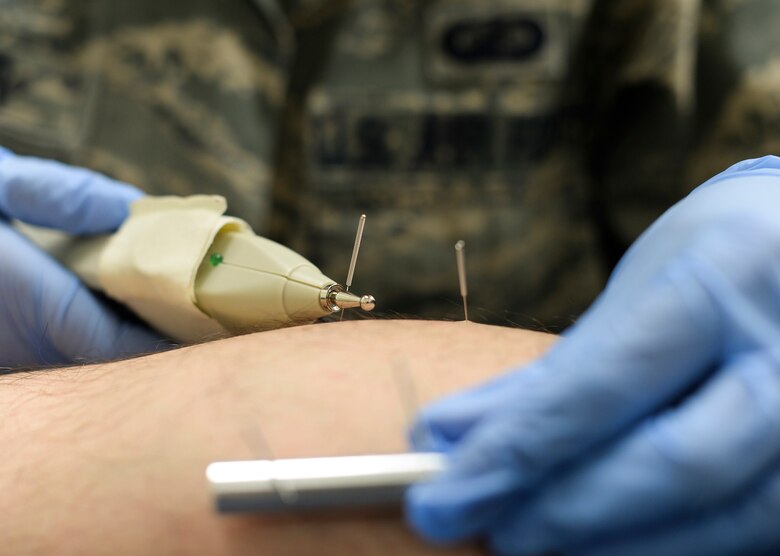
There are many treatments and remedies available for persons who suffer from this condition. And while there is no definitive treatment, the use of Atlanta acupuncture for lower back pain has experienced a dramatic increase over the past few decades. 


A number of placebo-controlled studies have established and validated Atlanta acupuncture for lower back pain as a reliable method for pain relief. In fact, the Annals of Internal Medicine has published a meta-analysis on Atlanta acupuncture for lower back pain showing how among the two dozen previously published studies on back pain treatments, acupuncture is “significantly more effective” than sham acupuncture or no treatment. 

ACUPUNCTURE: How it Works

Acupuncture is a significant component of Traditional Chinese Medicine. It has been used to treat a number of illnesses for hundreds of years in China and most Asian nations. 

The treatment is based on a theory that the human body is made up of channels or meridians where the “life force” or qi flows through. If these meridians are blocked off because of stress or any number of causes of illness, it would compromise the health of the individual. The goal of acupuncture, therefore, is to unblock the clogged meridians and allow the qi to once more flow freely throughout the body. This is done by sticking needles unto the affected meridians to release the qi. 

The Science Behind

In a recent study published in the Clinical Journal of Pain, Dr. Christer Carlsson and his colleague Dr. Bengt Sjlund of the Lund University Hospital in Sweden were able to prove the safety of using Atlanta acupuncture for lower back pain. 

Recruiting 50 patients (comprised of 33 women and 17 men) all of whom have been suffering chronic low back pain for a minimum of six months, the scientists randomly assigned one group out of three to undergo sessions of Atlanta acupuncture for lower back pain. The other two groups underwent electroacupuncture and placebo, respectively.

After four sessions plus a follow up treatment two months later, “significant” changes were observed in the group that underwent Atlanta acupuncture for lower back pain. Based on these results, the scientists concluded that “there is now reasonable evidence that acupuncture has a clinically relevant pain-relieving effect on certain forms of chronic pain.”

Several more studies were conducted investigating the effects of Atlanta acupuncture for lower back pain. While the question of efficacy remains widely disputed, a good number of the European medical community are adopting Atlanta acupuncture for lower back pain as a valid treatment method.

Back and Neck Pain

Image result for back and neck pain
As people get older, back and neck pain becomes extremely common. The condition affects not only the physical health of these individuals but also their social and economic well-being. Back and neck pain can disrupt work, routine and other daily activities you engage in. In fact, the condition is one of the leading causes of doctor’s visits and one of the most common reasons why people miss work. 

However, while back and neck pain can make your life awfully difficult, majority of cases are treatable without resorting to surgery. There are also certain management steps you can take in order to handle the issues that may arise as a result of back and neck pain. These measures will not only help relieve the pain but also help you reduce the likelihood of recurrences of this condition.

Causes

In most instances, back and neck pain is caused by strains or other injuries to the muscles and ligaments surrounding the spinal column. These, in turn, may be caused by sports injuries or a sudden increase in physical activity to which the individual is not accustomed. 

Viral infections may also cause flu like symptoms that are often accompanied by muscular pain affecting the neck and the back. The condition is known in medical circles as myalgia.


Another possible cause of your back and neck pain is the degenerative change that your spine undergoes. A person’s spinal column is made up of individual bones (vertebrae) that are joined together by the intervertebral discs, joints and ligaments. All these combined form the strong but flexible structure of your spine. 

As a person ages (middle age and beyond), back and neck pain occurs as a result of the wear and tear of your intervetebral discs and other associated components of your spine. The number one cause of these degenerative changes is movement. Motion causes the neck (cervical) and the lower parts (lumbar) of the spine to gradually break down. 

Being biological structures, your ligaments and joints will try to heal and repair themselves but as a result, your spine also becomes deformed with several bulging discs, buckling ligaments, and bone spurs. These changes could also affect the canals through which the nerves pass through, pinching them as a result.

Treatment

Although there is no definitive cure, back and neck pain is a highly treatable condition. The most common therapy used to treat back and neck pain is medications with pain-killing or anti-inflammatory properties. 

Passive physical therapy used in conjunction with exercise (active physical therapy) is also another option. Hot or cold compresses are applied to the area affected in order to alleviate the pain. Other modalities may also be used, including the application of electric impulses in order to override the muscular spasms that so often characterize back and neck pain.

Back and Leg Pain

Image result for Back and Leg Pain
There are two kinds of back and leg pain. One is acute or short term back and leg pain which could last from periods of a few days to a few weeks. This type of back pain is very common and may affect four out of five adults in the United States. The other type of back and leg pain is chronic, lasting for more than two months.

Chronic back and leg pain may be a symptom of a more serious condition. It is advised that you visit the doctor if you suffer from back pain that lasts longer than the normal two weeks to two months.

Here are some of the more common causes of back and leg pain:

Lumbar Spine Stenosis

This is a degenerative disease of the lumbosacral spine, affecting up to 90 percent of the U.S. population, most of them belonging to the middle aged or elderly age group. The disease is a major cause of morbidity, disability and lost productivity. 

In lumbar stenosis, the cauda equina roots, a type of nerve found inside the spine, are entrapped within the dural sac, causing excruciating and incapacitating back and leg pain. This entrapment of the cauda equina roots is a result of progressive hypertrophy of any of the osseocartilaginous and ligamentous elements, soft tissues that surround the spinal canal. 

Additionally, the degenerative changes or trauma could rupture or heniate the intervertebral disc, which is composed of a gelatinous, centrally located nucleus pulposes and a peripherally located annulus fibrosus. 

Lumbar stenosis mostly affects men and the middle aged to the elderly, although it could also occur in women and younger patients. Back and leg pain is the earliest complaint of this condition, which is often treated with some of the self-care methods available. This results in delay in diagnosis.

Sciatica

Sciatica is a condition affecting the sciatic nerve. Since this nerve travels from the lower back through the buttocks and into the leg, the pain often occurs in any of these affected areas. Back and leg pain as a result of sciatica can be more or less severe and is caused by a herniated lumbar disc. 

The degeneration (herniation) of the disc causes it to compress onto one of the contributing roots of the sciatic nerve, causing sharp back and leg pains to shoot up. Often, the pain in the leg, posterior thigh, or foot can be much worse than the accompanying lower back pain. At the onset, the patient usually experiences severe pain in the buttocks which runs all the way down through the legs or foot. In some cases, there is even no accompanying back pain.